Sunday, March 20, 2011

The Irish Ghetto of Montreal: Griffintown


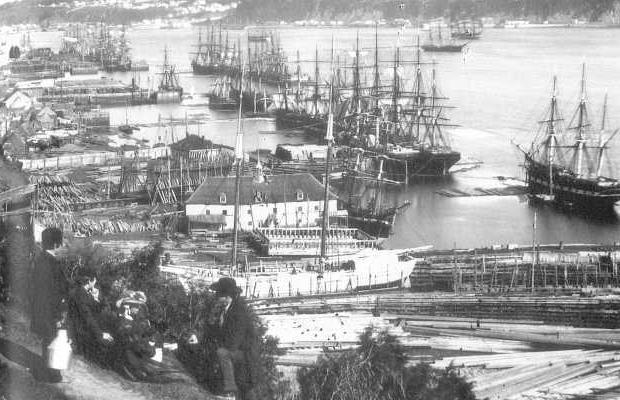
Montreal Irish ghetto during its "Golden Age": Griffintown was the Irish working class neighborhood near the old port and Lachine Canal. The canal was first dug in 1925-26 mostly by the Irish workers who dug the canal to bypass the St. Lawrence rapids (photo credit: public domain)
        Griffintown today is a disaster. Few visitors to these desolate and cold streets of Montreal  can even imagine that the area used to be the very heart of a vibrant Irish working class community called Griffintown. A community that has marked life in Montreal, Quebec and Canada and its sad decline and the eventual death.  A recently published book, An Irish Heart by Dreidger (1) makes it clear that knowing and understanding Griffintown means recognizing the hardships, failures, successes and the enormous challenges faced by waves of Irish immigrants and their descendants in their quest to build a brighter future for themselves and their families. And they did survive and thrive against all odds.

Digging the Lachine Canal to bypass the St Lawrence rapids. The Irish emigrants excelled in digging and the mega project provided jobs the the unskilled emigrants. The Lachine Canal, built in 1823, enlarged in 1843-48, then again 1873-74, enabled shippers to bypass the rapids along the St. Lawrence River. (Photo: http://canadachannel.ca/HCO)
        The emigration of the Irish to Canada can be traced to way before the first macabre famine ships started to bring their human cargo to North America in 1847. It is therefore a misconception to assume that the first Irishmen were necessarily catholic or poor. Some Irishmen had arrived as early as in the early 1600’s, while others later had established fishing and trading communities in the Maritimes and the St. Lawrence estuary. The final decades of the 18th century had seen a number of Protestant Irishmen from the mostly Northern Counties (Modern Northern Ireland): Ulster Scots, Calvinist Presbyterians and others Protestant groups, who were themselves under some pressure from the official Anglican Church in Ireland. They had chosen to leave Ireland, despite their privileged position as opposed to the suppressed and dispossessed Catholics.


                Port of Montreal in the 19th century not far from the Griffintown ghetto. 

                                                           (Photo credit: Supplied Photo, The Ottawa Citizen)

St. Ann’s Church was the heart of Griffintown’s Irish Catholic community. Built in 1854, it was Montreal’s second English Catholic church after St. Patrick’s (1847). Whereas the “lace-curtain” Irish around St. Patrick’s consisted of merchants, skilled workers and professionals, St. Ann’s parishioners were known as “shanty Irish” - unskilled laborers. The population of Griffintown began declining after World War II and in the early 1960s the city decided that Griffintown no longer had a future as a place for people to live. It was zoned as an industrial area in 1963. Then in 1967, part of the neighborhood was demolished to make way for the Bonaventure Expressway. Having lost most of its parishioners, St. Ann’s church was torn down in 1970. The site of the church is a park today, the park benches showing the structure's original site. (credit: montealmosaic.com, photo: Krikor Tersakian)


St Ann's church  (photo credit: Krikor Tersakian)

        Some of these early Irish emigrants did find some success in Canada. Others, like John McCord would became very wealthy and influential and their descendants were later closely associated with the future Griffintown community. The Napoleonic wars (1803-1815) and the resulting trade embargo against the British slowed the Irish emigration to almost a halt. The final defeat of the French emperor in 1815 eventually re-opened the trade routes and the Irish emigration increased exponentially with the arrival of waves of poor Catholics from the south counties. These emigrants were mostly the victims of sporadic crop failures (before the Great Famine of 1845-50). This post war period gave the cross Atlantic timber ship operators the opportunity to increase their profits by transporting tens of thousands of poor Irishmen to the New World on their return voyage from Europe.


The Black stone near the Victoria bridge marks the mass graves of 6000 famine and typhus victims who were buried near Griffintown in the  1840's. The huge stone was dug from the bottom of the St. Lawrence river while digging for the foundations of the bridge (Photo: Krikor Tersakian)
        The low fares to Quebec and the Maritimes made the La Belle Province an attractive choice for these would be emigrants. Most of these lowly early emigrants initially stopped in Quebec City, but the eventual opening of the original Lachine canal in 1825 made Montreal an accessible destination: The origins of Griffintown can actually be traced to this period and developments, when the young community at the mouth of the Canal became the jumping off point for the new emigrants en route to Upper Canada (Ontario). This young working class Irish community started to grow against all odds, while John McCord’s son Thomas was managing to have considerable control over the Griffintown district. He lived in his mansion just north of Griffintown in the leafy area of of Mount Royal, while thousands of Irish, French and Scots were sweating to completing the Lachine canal and therefore helping transform Montreal into a modern metropolis.


Fifty years after the Famine the Irish remember: Grosse Ile was a quarantine, where thousands of famine emigrants were processed and thousands more died from hunger, typhus and cholera as they arrived from Ireland. The dead were buried on this tiny island in the St Lawrence estuary, 30 km east of Quebec. Countless others died on the coffin ships and the corpses thrown to the sea. Photo depicts the religious ceremony at the inauguration of the Celtic cross in 1909, celebrated in the 1847 cemetery.


(PhotoLibrary and Archives Canada, archiveshttp://collectionscanada.gc.ca/grosse-ile)
        In the 1840’s, Phytophtera infestans fungus brought from the Americas struck at full force in the Irish countryside. The calamity that followed was the Great Famine that decimated almost all western and southern counties of the Erin Isle. Whole communities were cruelly evicted from their homes, as they could not feed themselves nor pay the rent to their mostly wealthy Protestant landlords. Successive potato crop failures and the resulting man made cruelties completely decimated Ireland. Countless victims were buried in mass graves, while hundreds of thousands survivors left on ships such as the Avon, the Voyageur or the Triton and many came to Quebec.

        The official quarantine station at Grosse Ile (30km east of Quebec City) was overwhelmed by the sheer numbers of the arriving sick and the dying. The dead were simply thrown to the sea or buried in mass graves on the island. The several sheds housing the sick were simply inadequate. More than 3000 died on the island, excluding the unaccounted death en route. The survivors eventually made it inland and some came to Montreal.

St. Patrick's Minor Basilica is a neo-Gothic church located just outside Griffintown, near modern downtown Montreal. (Photo: Krikor Tersakian)
        Nonetheless, it has to be underlined that Griffintown had  already become an important stopover for the destitute immigrants since the 1830’s, before the Great Famine hit. Cholera and typhus were widespread and uncontrollable, mostly “attributed” to these Irish newcomers. Some emigrants would continue their journey inland, while thousands were simply too ill or poor to even contemplate a move to farther destinations. The situations worsened starting 1847 as most new immigrants coming to Montreal either stopped or established in Griffintown, if not sick enough to be sheltered in one of the numerous sheds constructed across the Canal in an area known as Windmill Point in the Goose Village / Victoriatown (at the foot of the future Victoria Bridge). There were definite efforts to curtail the free movements of the Irish immigrants housed there in order to limit the spread of the endemic diseases.

Is this trumpet player the only happy person still in Griffintown? Graffiti on a wall  (photo: Krikor Tersakian)
        Griffintown was in turmoil. This young and already poor community was further burdened by this influx of problems, increasing poverty levels and disease. There were some sympathetic helping hands, as people were blaming Griffintown as a whole for all the diseases brought to Montreal, making life so precarious. If the Irish were to blame, then Griffintown was the arch villain. The Grey Nuns and the Sulpicians opened shelters to rescue orphans and accommodate survivors. In 1848, these death sheds were finally closed, but it was hardly the dawn of a “Golden Age” for Griffintown. Hundreds were still dying; poverty and famine were still widespread.


Fallen balconies and total abandon of the neighborhood (Photo: Krikor Tersakian)
        Then Mother Nature struck again: On January 1848, the icy St. Lawrence River spilled over its banks and literally flooded Griffintown and the neighboring Point St Charles under several feet of icy water. Hundreds of residents and orphans were thrown out to the streets. Even some mass graves totally disappeared under the icy water. Nevertheless, Griffintown would somehow rise from her ashes and become the “mythical heart of the Irish of Montreal and Quebec”. 

Pigeons and Desolation. (Photo: Krikor Tersakian)
        Griffintown since the earliest days was known as Nazareth Fief, a district granted to Jeanne Mance in 1654. Mance was a pious nun who built the Hotel-Dieu hospital, and the sisters of her congregation owned the lands of future Griffintown.  Eventually, the Gentlemen of Saint Sulpice (Sulpicians) took over these lands from the Societé Notre Dame, while the area was already being exploited by farmers and fur traders. In 1689, the Sulpicians made the first attempts to build a much-needed canal to bypass the Lachine rapids. These initial attempts were disrupted by Iroquois attacks killing 24 colonists. The Lachine canal would be built a century later through the hard working Irish labor. Meanwhile in 1697, Pierre Le Ber purchased some land at the end of the Nazareth Fief, and the now demolished St Ann chapel was built there. The chapel would give her name to the Nazareth Fief, while the area around was being increasingly populated by “hard-drinking and hard working” Irishmen. So much so, that in 1736 the sale of alcohol was banned in the district to avert further problems... 

Downtown Montreal from Griffintown: prosperity is so close yet so far (photo: Krikor Tersakian)
        The fall of the French regime in 1759-60, did not bring much change to Griffintown, as the Sulpicians were allowed to keep their properties and therefore collect taxes. New investors and their capital soon followed, while the McCord were extending their influence in the area and new wealthy families were moving away from the flood-prone banks of St. Lawrence to the upper slopes of the Mountain (present-day Westmount and the Golden Mile). Mary and Robert Griffin, owners of the Griffin Soap factory, gave their name to Griffintown as they also leased about a third of the original Nazareth Fief from the Nuns at the same time as the financial troubles of the McCord were mounting. 

Ruins by the Lachine Canal (Photo: Krikor Tersakian)
        Upon the completion of the original Lachine canal in 1825, several Irish workers left to seek new employment, such as the Rideau Canal project linking Kingston to Ottawa. Others stayed and settled in or around Griffintown, which was gradually being industrialized by the addition of factories such as distilleries, brickyards, shipyards and a tannery. The Lachine Canal transformed the area dramatically and the Griffin soap factory was no longer the only dominant force. Moreover, the proportion of Irish inhabitants was increasing steadily. The sanitary conditions, however were not necessarily improving in this booming district and therefore the inevitable epidemics throughout the 19th century were believed to be caused by the Irish.

        During this period in 1825, the charismatic Father Patrick Phelan would emerge as the hero of the Irish community in Griffintown. He was born in Kilkenny, Ireland, and was later known as the soggarth aroon or “dear priest” of the Irish emigrants. He was very close to his people and would influence and protect his Irish flock through the 1832 epidemic and the initial frictions with the French Canadians, with whom they used to share the Bon-Secours church in the east by moving to the St. Recollet chapel. Father Phelan was also a visionary and arranged for a large tract of land some 40 km north of Montreal belonging to the Sulpicians to establish a now defunct Irish farming community in St Columban, west of St Jerôme. 

Griffintown flood. The St Lawrence was a perennial danger, and a retaining wall was constructed much later in 1903 after years of flooding (Photo credit: Montreal Mirror)
        The political loyalties of the young Griffintown community were tested during the 1830’s political upheavals and the armed rebellion against the British colonial realm: The Irish were torn between the Catholic French and the dominating Protestant British. Meanwhile, Griffintown was somehow booming, despite the arrival of the Famine emigrants. By 1860, more than half of the 30,000 Irish living in Montreal were in St. Ann’s ward, in and around Griffintown.
        A major fire destroyed nearly a third of Griffintown in 1850. Both the negative and positive effects of the Industrialization were being felt across North America, and the booming working class Griffintown was no exception. The industrial boom continued with the construction of new factories with mostly unskilled Irish laborers, while the more qualified jobs went to English and Scottish workers. Pollution, unsafe conditions and child labour were common. This is the period demands for better working conditions led to strikes and formation of Unions. The Victoria railway bridge (1854-59) linking nearby Windmill point to Montreal’s south shore across the St Lawrence was another turning point in Griffintown’s history. The construction of this very important bridge provided abundant jobs and transformed Montreal into a railway hub. By that time, the community of St. Columban was already disintegrating, and many middle class Irishmen were integrating into the larger Québec society. They mostly gathered at the newly erected St Patrick’s neo-Gothic church (1947), northeast of Griffintown and closer to the fashionable districts near the protestant bastion of the Golden Mile. The Irish community was not as united as it seemed, and Griffintown was still rooted in relative poverty and hardship. 

Victoria Bridge railway bridge: Montreal became a transportation hub (photo credit: http://canadachannel.ca)
        Eventually it was becoming obvious that Griffintown badly needed her own church. Bonsecours, Recollet and St. Patrick were a bit far and even felt somehow alien to the locals. The answer was St. Ann’s church, built in 1854 (now demolished). The Irish Catholics were getting organised and making slow but steady progress despite numerous community problems (e.g. the well-documented murder case of Mary Gallagher). The constant struggles and fights for jobs did not slow down their love for earthly pleasures. Meanwhile, sports (such as lacrosse) were gaining in popularity, and the local team called the Shamrocks was making everyone proud as they clinched the local championship in 1870.

The stables of the Old Montreal tourist carriage horses are in nearby Griffintown (Photo credit: catalyse urbaine portfolio)
        The perennial flood saga led to a record-breaking disaster of April 14, 1861. Dreidger describes Griffintown as “an unlikely Venice”, when gigantic ice blocks completely overwhelmed Griffintown causing total chaos and writing another chapter in the long list of sufferings endured by the community. In 1886 and1869 yet another series of inundations brought the best out of the surviving community’s fighting spirit and demonstrated the ineffectiveness or lack of care of the local governments. The authorities, however, were still resisting calls to finally approve and erect a permanent wall to prevent floods. Such a wall was finally erected by 1901 and Griffintown ceased to be the victim of these horrible natural tragedies.

Orange order march in Toronto. Fortunately, the presence of these archaic groups is mostly history in Québec. They still somehow thrive in Ontario and some parts of the Maritimes, spreading their extremist Protestant /loyalist message while celebrating their ''Glorious Revolution''. (Photo: 3rd world first blogspot)
        The very intriguing issue of the Irish catholic community’s interaction with the Orange Order was further deteriorated when a anti Catholic populist agitator called Alessandro Gavazzi came to town, causing riots and deaths. Age-old enmity, hatred and resistance against the oppressing Orangemen had never died among the Irish Catholics, even after decades in Montreal. The Protestant extremists were as usual intimidating and condescending toward the “popish” residents and did not miss any chance to carry on with their traditional aggressive stance as they did in Ireland.


A Canadian Father of Confederation D'Arcy McGee's commemorative plaque at St. Patrick's Basilica, Montreal (Photo: Krikor Tersakian)

Parnell Monument in Dublin. The Irish national hero visited Montreal in 1879.''No man shall have the right to fix the boundary to the march of a Nation''   (Photo credit http://irelandposters.com/dublin)
        Griffintown, understandably, was also a hot spot of fierce rivalry and clashes between the Protestants and the Catholics. The fiery presence of a fiery and provocative Italian preacher called Gavazzi had sparked widespread riots leaving six deaths and causing more tensions. The reaction of the Irish Catholics against any perceived or real intimidation was deeply rooted in history back to the days of the planters in Ireland and the plundering genocide perpetrated by Oliver Cromwell against the Catholics. The Catholics were dominated by the Protestants since the days of William III of Orange and his “Glorious Revolution”, turning Ireland into an apartheid style administration where the Catholics were mere subjects with not much civil or religious rights or freedom. The transposition of these age-old tensions and mutual mistrust had simply never died in the New World. These tensions constantly resurfaced during the St Patrick’s parades each March 17 (since 1824) and each July 12 (Glorious Twelfth, when the Orangemen celebrate the Battle of the Boyne). 

Battle of the Boyne: Protestant forces vanquished Catholics. William of Orange and his English wife, Mary, daughter of James II, both Protestants, were invited to replace the Catholic James II as joint monarchs in 1689 in what came to be known as the ‘Glorious Revolution’. James did not accept his ouster and led an army to try to claim his birthright. The rival forces met in Ireland in 1690 at the River Boyne.(photo public domain)

        Griffintown was always closely implicated in politics, even though by 1830 most of the Irish Catholic men were ineligible to vote because of elitist voting requirements linking vote to property ownership. During elections, local churches became targets of attacks on both sides and the tensions increased even more when the Canadian Parliament moved from Kingston to Montreal just at the edge of Griffintown. The local Irish community was now even closer to “real action”, taking part in fierce electoral battles between Tories, Reformers, French, English, Upper Canada and Lower Canada. The political mix was highly explosive and Griffintown did not disappoint, with a background of the classic tensions between Orangeman and Catholics.

Fenian Raids on Canada in the 1860's (photo credit: Canadian War Museum)
        The Father of Canadian Confederation D’Arcy McGee was not the “product” of Griffintown. He was born in Ireland and lived there for long years, but his political heritage is closely associated with Griffintowners. McGee arrived in Montreal in 1857, witnessed the hard conditions of the Irish in Montreal and “undeserved” bad reputation and decided to act. He launched his political career facing six candidates vying for the Montreal seat as “representative” of the Irish and won a much-contested election. Riding high on Griffintown support, he left for Ottawa as an MP, but was already under fierce attack by Orangemen and other Protestant groups. Shortly afterward, McGee was locking horns with Irish Catholic radicals known as the Fenians, who advocated the use of force to achieve independence for Ireland. McGee launched ferocious attacks on the Fenians publishing letters and trying to stop their infiltration into mainstream organizations such as the St Patrick’s society in 1861. The Fenians actually staged armed attacks on Montreal and were determined to undermine their powerful enemy, McGee. In 1868, the treat of Fenians plots was still very much alive, and on April 7, 1868, the astute and charismatic Canadian Confederation founding father was shot dead in Ottawa in front of his home (probably by the Fenians). McGee had become a Canadian hero, forging alliances with the Protestant ruling elites (Sir John McDonald), but he had also frustrated many Griffintowners and Orangemen with his visionary views for a more inclusive Canada. His funeral was very impressive, with hundreds of thousands people lining the streets from St Patrick’s to Notre Dame and the Mount Royal cemetery. He had helped build new nation but was unable to stop the hatred between his own Irish people.

The author also mentions about the visit of the great Irish politician Charles Stewart Parnell to Montreal in 1879, where thousands of Irish well-wishers greeted him and that he met with some Griffintown students. 

St. Patrick's Minor Basilica in Montreal: Opened in 1847, the very year the Great Famine struck Ireland (Photo credit: Krikor Tersakian)
        The Irish and French speaking catholic communities shared a religion but the power struggles for money and influence was incessant throughout the 19th century. This was best illustrated by the struggle between the St. Sulpice Order and the Bishop of Montreal. The Sulpicians were the Seigneurs of Montreal since 1663 and were both powerful and wealthy. However, things got complicated starting 1821 with the appointment of Jean Jacque Latrigue (first Bishop of Montreal) and then his more hard-line successor Ignace Bourget. In 1866, Bourget announced a plan to subdivide the Island into several Parishes, all directly under his control. This was a dangerous plan for St Patrick’s, because it would dilute the Irishness and decrease the resources of the parish. The priests simply refused to cave in to the Bishop. The Montreal Irish, at the time, represented almost a third of the city’s population, and even pressed for a third Irish church. They were constantly fighting off the Bishop, who had also influenced the decision to close the St Patrick’s hospital, creating instead two Anglophone wards in French Hotel Dieu Hospital. There was widespread discontent about Bourget’s plans, and father Patrick Dowd, the priest of St. Patrick’s launched a counterattack against the Bishop. He was given a helping hand by politician and parishioner D’Arcy McGee. McGee even went to the Vatican as part of a delegation to plead with Pope Pius IX and save the Irishness of St. Patrick’s church. Vatican’s response was positive, but came only five years after McGee’s assassination. 

Stained glass at St. Patrick's basilica  (Photo credit  Krikor Tersakian)
        In the 1880’s Montreal was firmly the leading industrial and economical power center in Canada, and the Irish had to play a balancing act between the Francophone and the Anglo-Protestants. During that Golden Age period, the Irish were also becoming more influential and better organized as a community: The St. Patrick’s day parades were growing larger and more popular. Sport teams and cultural associations were sprouting, such as the Nazareth Street Club (Griffintown Boys Club). The Home Rule in Ireland associated with Parnell had brought a new organization called the Ancient Order of Hibernians, which had an increasing support in Griffintown and notable influence in the Irish community’s affairs, campaigning for more equality and social justice. Late 19th century saw Montreal’s Francophone become a majority, while transport facilities helped many Irish to leave for the suburbs (Verdun, Notre Dame de Grace etc), therefore creating conditions for assimilation.  

        During WWI, the Irish responded to the calls to join the fight on the side of the allies in Europe: Four thousand Irishmen joined the Canadian Expeditionary Force, despite initial mixed feeling about helping the British. Things changed with the tragic events in Ireland in 1916, when Whitehall brutally suppressed the Easter Rising. The Irish nationalist feelings rose, and in 1919, the American-born Éamon de Valera (future Taoiseach and President of the Republic), paid a visit to the U.S.A. He drew support for the Irish cause from visiting Griffintowners. Tensions were boiling on all sides and eventually even the St Patrick’s Parade’s very existence was at risk. Meanwhile, the post war Spanish flu pandemic took at least fourteen thousand lives in Quebec alone.

American-born Éamon de Valera (future Taoiseach and President of the Republic of Ireland), paid a visit to the U.S.A. He drew support for the Irish cause from visiting Montrealers. He was captured during the failed Easter rising in 1916 and his life spared by the British mainly because of his American passport. (photo: public domain)
        During the 1930s, The Great Depression took a heavy toll on the Canadians: an estimated 30% of Montrealers lost their jobs. The Stock market crash forced the Government to launch public Works, in order to stimulate the economy and provide wages to the unemployed. As a result, Griffintown got the Wellington Tunnel, dug under the Lachine Canal, replacing the old Wellington Street Bridge. This project required the eviction of hundreds of Griffintown residents from near the St Ann’s Church. Many more were displaced as the result of the construction of an elevated CNR railway track linking the nearby Victoria Bridge to the new central Station (1938-1945). These public works accelerated the Griffintown demise, even though on the social and cultural fronts, the community was somehow still alive and kicking. St. Ann’s Parish dramatic society, the Young Men’s Society, the fighter named Joe Kid Coughlin, the baseball players or even the majority Protestant Griffintown Club were all contributing to the social life. Griffintown was alive and kicking, even though the end of this fabulous adventure was fast approaching.

        The depression lasted well into 1939 when World War II broke out. Paradoxically, the war gave hope to thousands in Griffintown, who were lured to the army with the promise of some financial protection. Montreal was transformed by the mobilization and the security measures. In 1944 Griffintown even experienced a tragic accident when a bomber plane from nearby Dorval airport crashed at the corner of Shannon and Ottawa streets. This tragedy was followed by a major fire and even an earthquake that shook Montreal on September 5, 1944! 

The Lachine Canal today: Parts revitalized with condominiums, parts still in desolate state (Photo Credit: http://www.bcee.concordia.ca/index.php/Lachine_Canal)
        Griffintown narrowly voted for the Government referendum to introduce military conscription: Quebec voted massively against the proposal, while Canada in general supported it. Griffintown results showed an even split. The War naturally brought some economic benefits, but Griffintown was still changing beyond recognition through demolition of houses and expropriations. The end was near as Griffintown was starting to disintegrate. Many residents were leaving permanently and the district was falling victim of the ‘modern times’ in the post war economic boom. The preparation for the Montreal Expo ’67 and the opening of the St. Lawrence Seaway (rendering the Lachine Canal obsolete), were other fatal blows. The Dorval Airport and the new Port of Montreal drew economic activities away from Griffintown. Montreal Mayor Drapeau was actively ‘modernizing’ the city, including the destruction of poorer neighborhoods like Griffintown. The Quebec francophone Quiet Revolution did not help the cause of the Irish, nor the fortune of the local politician named Frank Hanley.

Remembering Griffintown, a lost part of Montreal  (Photo credit: www.remembergriffintown.org)
        In 1964, Victoriatown was bulldozed and the former Goose village became a ‘sea of asphalt’ with new French street names. By 1970, Griffintown was almost finished. In 1969, the Bishop of Montreal asked the Redemptorist to close their St. Ann parish. On June 15, 1970, the church was tragically demolished. That was the final nail in the coffin., and the community had become a ghost town, ‘just like a ghost village of Ireland during the Famine’.

The recent projects to revitalize Griffintown are merely a romantic mirage as the Irish spirit is long gone and is impossible to recreate. There is new interest in rediscovering and somehow preserving the memory of this very interesting community, but at the official level, there is a lack of substantial efforts to revive the lost spirit and the Irishness of these empty streets. Opposing real state and commercial developments in Griffintown will certainly not suffice to bring back to life that almost epic community.

Griffintown rubble and the modern city not far behind. (Photo credit: http://www.griffinsound.ca/griffintown)
        Griffintown became a vibrant Irish community for more than a century and a half. It was more than lucky survivors of the famines or epidemics, the “navvies” who built the canals and the nearby Victoria Bridge and other skilled or unskilled laborers. Griffintown was also more than a bunch of underprivileged and persecuted mostly catholic working class people. The community as a whole was energetic, had a vision and an eye for upward mobility, somewhat disdaining authority and their quest for survival. They thrived to find work, provide for their families and have fun. They took care of themselves and their community the best they could through arts, music and sports. Griffintowners had also an insatiable appetite and passion for politics, always along the religious divide. Long live their memory.

St Patrick's Basilica stained glass. Irishness in sad decline, in an increasingly mixed and hyphenated society of Canadian-Irish   (Photo: Krikor Tersakian)
------------------------------------
Bibliography

Dreidger, Sharon Doyle: An Irish Heart, Harper Collins Publisher, 2010

Dreidger interview with Brent Holland, May 26, 2010  http://www.brenthollandshow.com/index.html

Krikor Tersakian, March, 2011, Montreal

Tuesday, December 28, 2010

Murex: The Imperial Purple Dye of Tyre


Dye Murex, Trunculariopsis (Murex) trunculus can be frequently seen on the muddy-rocky and/or algae covered intertidal-sub-tidal zones of the Mediterranean - Aegean system. A gland situated under the gills secretes a mucous liquid which may produce yellow, green, blue, red or the famous "royal purple" colors of the ancient Mediterranean peoples, according to the method used. (Photo credit: Mehmet Atatur http://www.treknature.com


For Kings only: the Tyrian Purple
The Emperors of Byzantium made a law forbidding anybody from using Tyrian Purple except themselves. The expression ‘born in the purple’ rose from this practice. But what is the amazing story behind these prohibitively expensive and legendary dyes today costing over 3 Million US$ a liter?


Three thousand years ago the Phoenicians controlled trade in purple dyed silks. The gland of the sea-snail Murex trunculus secretes a yellow fluid that, when exposed to sunlight, turns purple-blue. A similar dye, the Tyrian Purple was made from the Murex brandaris yielding purple red colors. Both dyes were extremely expensive. 


Ancient Phoenicia is renowned to have given the world the first phonetic (non syllable) based alphabet, a Mediterranean mercantile tradition with colonies like Carthage, and flourishing civilization the ancient Greeks owed a lot to. One lesser known contribution of the ancient "Lebanese" is the Purple Dye which came to be known as the Imperial Purple, that the Phoenicians of the city state Tyre extracted from the sea snail mollusks called Murex".The word 'purple' comes from the Old English purpul which originates from the Latin purpura. This in turn is derived from the Koine Greek πορφύρα (porphyra), name of the Tyrian purple dye manufactured in classical antiquity from a mucus secreted by the spiny dye-murex snail such as Murex trunculus and Murex brandaris. This extremely expensive dye was prized since ancient times and by the time of the Romans, the noblemen had already used it to color ceremonial robes and that became a royal "tradition" around the world. The most unusual aspect of Tyrian purple is the extracted color itself and its variations. In solution, the snail secretion color is blue but as a dye in the solid state it is purple. Just in case you just have to touch up an original Roman textile you can get genuine Tyrian purple dyes for $3,900 a gram or more than $3,000,000 a liter (2)!


Silk and Murex Dye:
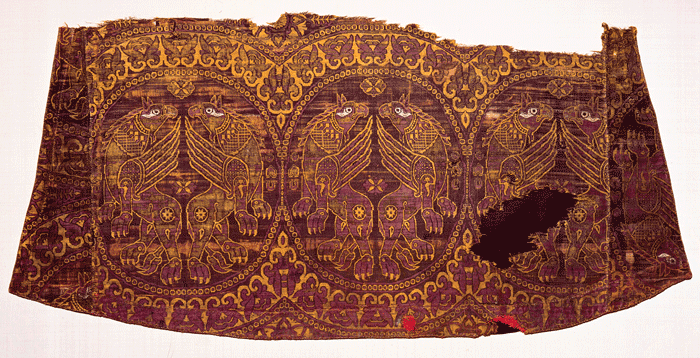
Among the more unlikely “marriages” arranged by human ingenuity is the one between the Chinese domesticated silk moth, Bombyx mori, and the Mediterranean sea snails Murex. The Murex dye, when brought together with silk, led to the world’s longest-lasting fashion statement.This fragment from an 11th-century Byzantine robe shows griffins embroidered on a delicate silk woven of murex-dyed threads. (6). Sion Switzerland, Église de Valère, Riggisberg (Philippa Scott, Saudi Aramco World)
Harvesting The Tyrian Purple Murex:
The mollusks needed by the Phoenicians were obtained with great difficulty. The Mediterranean sea has no tides and therefore does not uncover its shores at low water like the oceans. The mollusks prefer tolerably deep water and to procure them in any quantity it was necessary that they should be fished up from a certain depth: A long rope was let down into the sea, with baskets of reeds or rushes attached to it at intervals, constructed like lobster-traps baskets, with an opening that yielded easily to pressure from the outside, but resisted pressure from the inside, and made escape, when once the trap was entered, impossible. The baskets were baited with mussels or frogs, both of which had great attractions for the Murex /Purpuræ/, and were seized and devoured with avidity. At the upper end of the rope was attached to a large piece of cork, which, even when the baskets were full, could not be drawn under water. It was usual to set the traps in the evening,and after waiting a night, or sometimes a night and a day, to draw them up to the surface, when they were generally found to be full of the coveted Murex. (3).The snails were collected in large vats and left to decompose. 

Not much is known about the subsequent steps, and the actual ancient method for mass-producing the two murex dyes has not yet been successfully reconstructed; this special “blackish clotted blood” colour, which was prized above all others, is believed to be achieved by double-dipping the cloth, once in the indigo dye of H. trunculus and once in the purple-red dye of M. brandaris (5).

The Phoenicians established also a production facilities outside their traditional Lebanese shores, such as the one at Iles Purpuraires at Mogador, in Morocco.


Murex Purple dye and closely associated "royal" colors, so difficult to get in ancient times. There has been much speculation as to the precise colour the process actually produced by the Murex. Because of many variables in the process, Murex didn't produce any one colour. Sometimes the colour was the same as the flower “violets”, sometimes very similar to fuchsia. But garments of Tyrian Purple were supposedly produced by double-dyeing the fabric, which gave a darker colour. Consequently, the colour produced in that process wasn't “purple” as we understand purple but a dark crimson or even maroon (8).


Worth its Weight in Diamond


It is believed that it generally takes 12,000 snails to produce just 1.4 grams of this dye. Because of this, it was so expensive, that the historian Theopompus reported that,“Purple for dyes fetched its weight in silver”. Yet, there was a craze for this dye as a status symbol. In fact the Emperors of Byzantium made a law forbidding anybody from using it except themselves. The expression ‘born in the purple’ rose from this practice.


Dyes ancient, Dyes modern


Until modern times, all dyes were made in a similar manner, from animal sources and more often, plant sources. For example, cochineal (which gives a crimson colour) was made from the scale insect Kermes vermilio. To make one pound of dye, 70,000 insect bodies were boiled, dried, powdered and boiled again in ammonia. The red dye was then extracted by filtration and precipitation by alum. Indigo was extracted from leaves of the indigo plant (Indigofera tinctoria).
In 1909, Paul Friedländer discovered the chemical structure of Tyrian Purple (now called 6,6-dibromoindigo) and by then, the nature of the dye industry had completely changed. New dyes were now being made from the by-products of coal extraction. The first of these was mauve, synthesized by the British chemist William Henry Perkin from coal tar in 1856. As these dyes were cheaper and offered a wider range of colors, the need for natural dyes disappeared. And that’s why the clothes we buy today and no longer priced on the basis of colour! (1)


"Born in the Purple": Aristocracy and Power


Born in Purple: Byzantium Emperor Justinian I dressed in a robe dyed with Tyrian Purple. Interestingly, unlike other dyes that faded in sunlight, Tyrian purple would become darker.


Imperial Purple: From Constantine: until the half of Fifthcentury, the emperors were buried in immense red porphyry sarcophagi . Marcian (450-457) was the last to be honored with such a burial. For many emperors this stone was the first thing they saw, and the prestigious title “Porphyry Born” common within the emperors of Constantinople, meant they saw the light in the magnificent room called “born in the purple room”. It was a squared room of the Imperial Palace, roofed with a pyramid, all covered with red porphyry, where the empress gave birth to the imperial heirs. (Photo credit: http://dragons-intl.com)


The Imperial Purple tie of Prince William is surely not a random choice, nor the robe of the Pope Benedict XVI. Traditions continue, even if they go unnoticed by the general public. Here, William in an official photo with bride-to-be Kate Middleton at Buckingham Palace, 2010. http://www.celebitchy.com. 


The oldest known murex-dyed textile is a fine wool tapestry woven during the fifth to fourth centuries bc in Persia. Originally a garment, it was later adapted—in a well-worn condition—as a felt-lined horse trapping, which was buried with its owner (Philippa Scott - State Hermitage Museum, Saudi Aramco World)


It's a purple world!
Beyond the Mediterranean, there are a number of other sea snails useful for dyeing but none equalled Murex. Some 140 species flourish off the shores of North and South America. Of these, Purpura patula, Purpura persica and Purpura aperta inhabit the Gulf of Mexico, and these are still valued today in Central America, where women use them to color yarn. Sun and saltwater cause the pigment to oxidize on the fibers into an attractive but uneven purple. Unlike the Mediterranean types of Murex, which must be crushed in order to obtain the tiny sac of pigment, the gland on the American shellfish is closer to the surface, and the creature can be persuaded to squirt its secretion onto the yarn. Afterward, the shellfish can be put back into the sea, given time to recover, and used again. Threads colored in this way tend to retain a fishy smell, however. The dyes in many pre-Columbian textiles and the purple paint in the Nahuatl codices have been analyzed and found to be shellfish purple.
 

In ancient Japan yet another type of shellfish was used. In the waters around Scandinavia and the British Isles, the Anglo-Saxons called purple dye "fiscdeag" (“fish dye”), and in the seventh century the Venerable Bede wrote about red and purple dyes obtained from sea snails. In Australia, although there are equivalent shellfish, no evidence has yet been found that these were ever used for textile dyeing.(7) 


Phoenicia gave us more than the Purple Dye: Phonetic Alphabet, sea trade and Carthage.


According to legend the first purple dye was discovered by Herakle-Melqart city god of Tyre) who was walking along the Levantine shoreline with the nymph Tyrus. His dog found a Murex snail and devoured it, which left a beautiful purple color around the dog's mouth. Tyrus saw the color and told Herakle-Melqart she would not accept his courtship until he brought her a robe of the same color. So he collected the Murex shells, extracted the dye, and tinted the first garment purple.


Byblos, Sidon and Tyre were the main Phoenician cities and traded with many countries round the Mediterranean, especially Italy. The Phoenicians first traded in Italy with the Etruscan, a society of artisans skilled in the art of jewelry making. However, it was with the creation of Imperial Rome by Romulus in 753 B.C. that the Murex’s purple dye began to be synonymous with power,wealth and position.
The exports of Phoenicia as a whole included particularly cedar and pine wood, fine linen from Tyre, Byblos, and Berytos (ancient Beirut), cloths dyed with the famous Murex Tyrian purple, embroideries from Sidon, metalwork and glass, glazed faience, wine, salt, and dried fish. They received in return raw materials, such as papyrus, ivory, ebony, silk,amber, ostrich eggs, spices, incense, horses, gold, silver, copper, iron, tin, jewels, and precious stones. The name Byblos is Greek; papyrus received its early Greek name (byblos,byblinos) from its being exported to the Aegean through Byblos. Hence the English word Bible is derived from byblos as "the (papyrus) book." (3)


The ancient Phoenician city of Tyre was named after after the rocky formation on which the town was originally built. Tyre means “rock”, adjective for Tyre is Tyrian. Tyre was a Phoenician island city founded around the third millennium BC and known as Queen of the Seas. In the 10th century BC, King of Tyre, Ahiram, joined two peninsulas by landfill and extended the city further by reclaiming a considerable area from the sea and built two ports and a temple to Melkart, the city's God.
Tyre grew wealthy from its far-reaching Phoenician colonies and its industries of purple-dyed textiles in the first millennium BC. The Phoenician expansion began about 815 B.C. when traders from Tyre founded Carthage in North Africa, of which Hannibal is the famous historical leader challenging Rome. 
Eventually Phoenician colonies spread around the Mediterranean and even the Atlantic, bringing to the city a flourishing maritime trade. In 332 B.C. Alexander the Great set out to conquer this strategic coastal base in the war between the Greeks and the Persians. Unable to storm the city, he blockaded Tyre for seven months. Alexander was so enraged at the Tyrians' defense and the loss of his men that he destroyed half the city. The Romans later built great important monuments in the city, including an aqueduct, a triumphal arch and the largest hippodrome in antiquity.
Taken by the Islamic armies in 634 Tyre strong fortifications enabled to resist to the Crusaders until 1124. After about 180 years of Crusader rule, the Mameluke retook the city in 1291, and then it passed on to the Ottomans at the start of the 16th century. With the end of the World War I Tyre was integrated into the new nation of Lebanon, a few miles north of the highly volatile border with Israel.


The legendary shell Murex.This is a specimen of Haustellum haustellum, sometimes named as the Mouse Murex also known as Snipe's bill Murex and Woodcock Murex, a denizen of the Indo-Pacific region(Photo: Mehmet Atatur: Trek Nature)


Murex dye with different shades: an example of Suzani Bokhara, Uzbekistan Silk on cotton, circa 1840. Trellis design on center field;murex dye used in flowers on border; irises, pomegranates and carnations throughout. 90 in x 57 ( http://www.estherfitzgerald.com)


But what is the secret of this color purple and why was it so unique in history?
There is simply no other color so closely attached to Greeks and Romans but royal purple very well known and as Porphyra (πορφύρα) . It was a custom during the early ages of Christianity, to write their most important manuscripts in gold or silver letters upon vellum stained with royal purple. These manuscripts were produced in this manner in order to be able to present the stronger proof of the high degree of respect with which they were made.(4)


The color of your robe indicates your social class
Today, clothes of all colors cost the same. But did you know that a few generations ago, the cost depended on the color of the cloth? This was because dyes were expensive to obtain. Tyrian Purple was a dye so expensive that only kings could afford it!

The imperial robes of Roman emperors were Tyrian purple trimmed in metallic gold thread. The badge of office of a Roman Senator was a stripe of Tyrian purple on their white toga. Tyrian purple was continued in use by the emperors of the Eastern Roman Empire until its final collapse in 1453. In medieval Europe, blue dyes were rare and expensive, so only the most wealthy or the aristocracy could afford to wear them. (The working class wore mainly green and brown.) Because of this (and also because Tyrian purple had gone out of use in western Europe after the collapse of the Western Roman Empire in AD 476), Europeans’ idea of purple shifted towards this more bluish purple known as royal purple because of its similarity to the royal blue worn by the aristocracy. This was the shade of purple worn by kings in medieval Europe.


Shades of the Murex: Thistle Lilac, Mauve, Violet, Orchid, Magenta, Fuchsia, Dark Magenta, Purple, Plum, Dark Orchid, Dark Violet Indigo, Lavender, Wine, Heliotrope, Royal Purple, Mulberry, Aubergine… No matter what the name is they all have in common the blended colors of blue and red. (http://slovenian.wunderground.com/blog)


Jesus, too, is Born in Purple?: depicted and dressed as a Roman soldier but wearing royal purple and gold. He is "trampling" the devil (snake) as well as Rome (the lion), and is holding the scriptures which read "I am the way, the truth and the life." By the 5th Century, such a claim would have been acceptable. (photo credit: Alamo.edu)

 
The port city of Tyre (Today's Sour in South Lebanon) was the ancient capital of Phoenicia and was best known for the production of purple dye extracted from the murex sea snail. The city's strategic and commercial value made it a target of many conquests, and several civilizations have left behind their architectural and cultural legacies. Roman ruins in the Al-Bas district include the largest and best-preserved Roman hippodrome—or horse racing arena—in the Middle East, which held more than 20,000 spectators.(Photo credit 1996- National Geographic Society).

The first phonetic alphabet was the most important gift of the Phoenicians to the world. The Greek alphabet was directly inspired from these. Complicated and non practical Alphabets based on syllables rather than sounds were out.

References:

1: Human Touch of Chemistry http://www.humantouchofchemistry.com/purple
2: www.most-expensive.com

3, 4: http://Phoenicia.org

5: Greek Heraldry Society 6: Philipa Scott: http://www.saudiaramcoworld.com/issue/200604/millennia.of.murex.htm:  

7: Philipa Scott, Saudi Aramco World, p. 30-37, July/August 2006.  

8: http://www.lexorandi.es/Aliturgico/colorviolaceo.htm

Krikor Tersakian, 2010 Montreal, Canada